

Your family’s bathrooms
Bathrooms
Check the last visit.
Their own code is required to open the lid.
Tap a bathroom to check its latest visit.
Know who used the toilet.
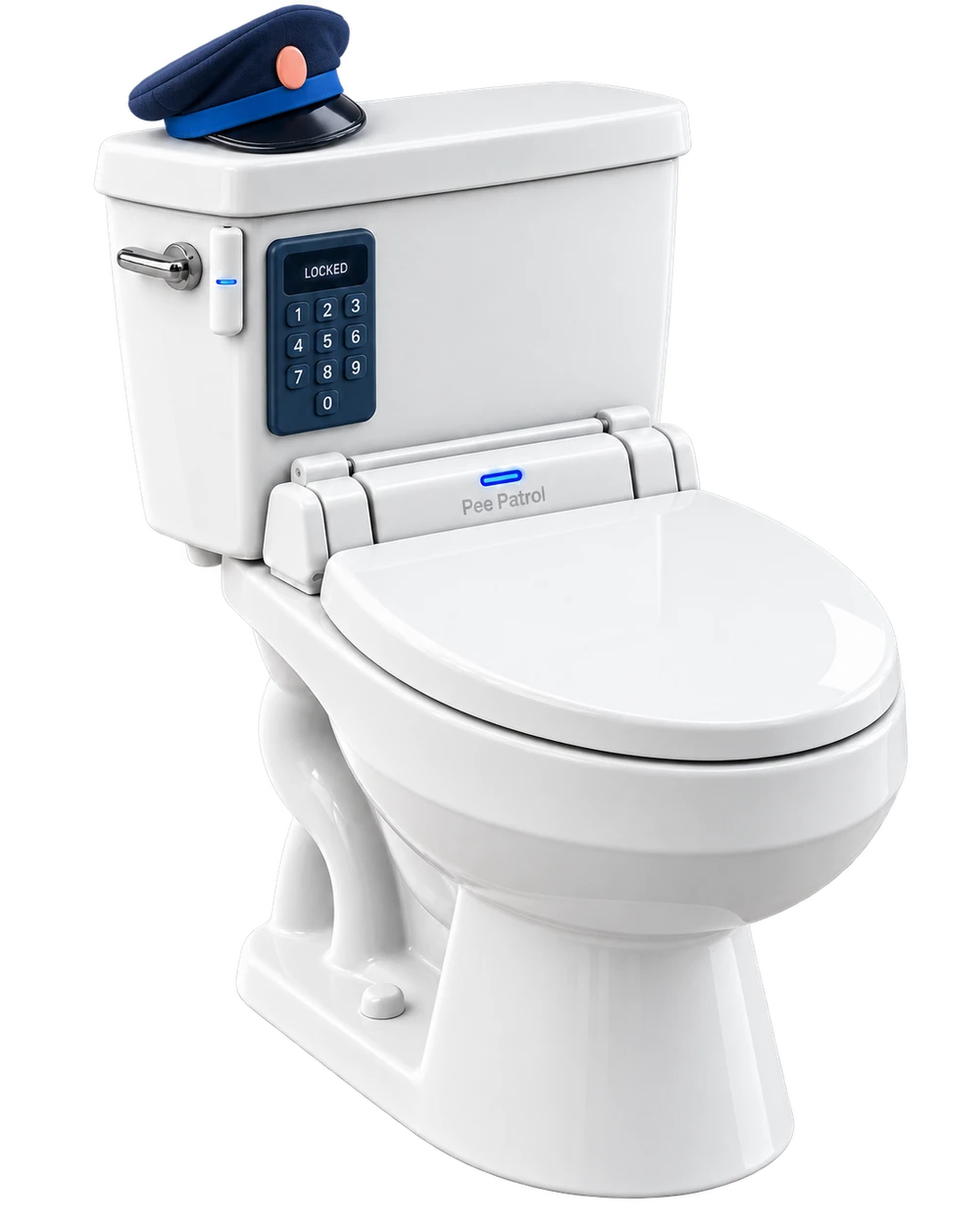
Everyone needs their own code to open the lid and use the toilet. Pee Patrol records who went, so you can see who was last if the seat is wet or the toilet wasn’t flushed.
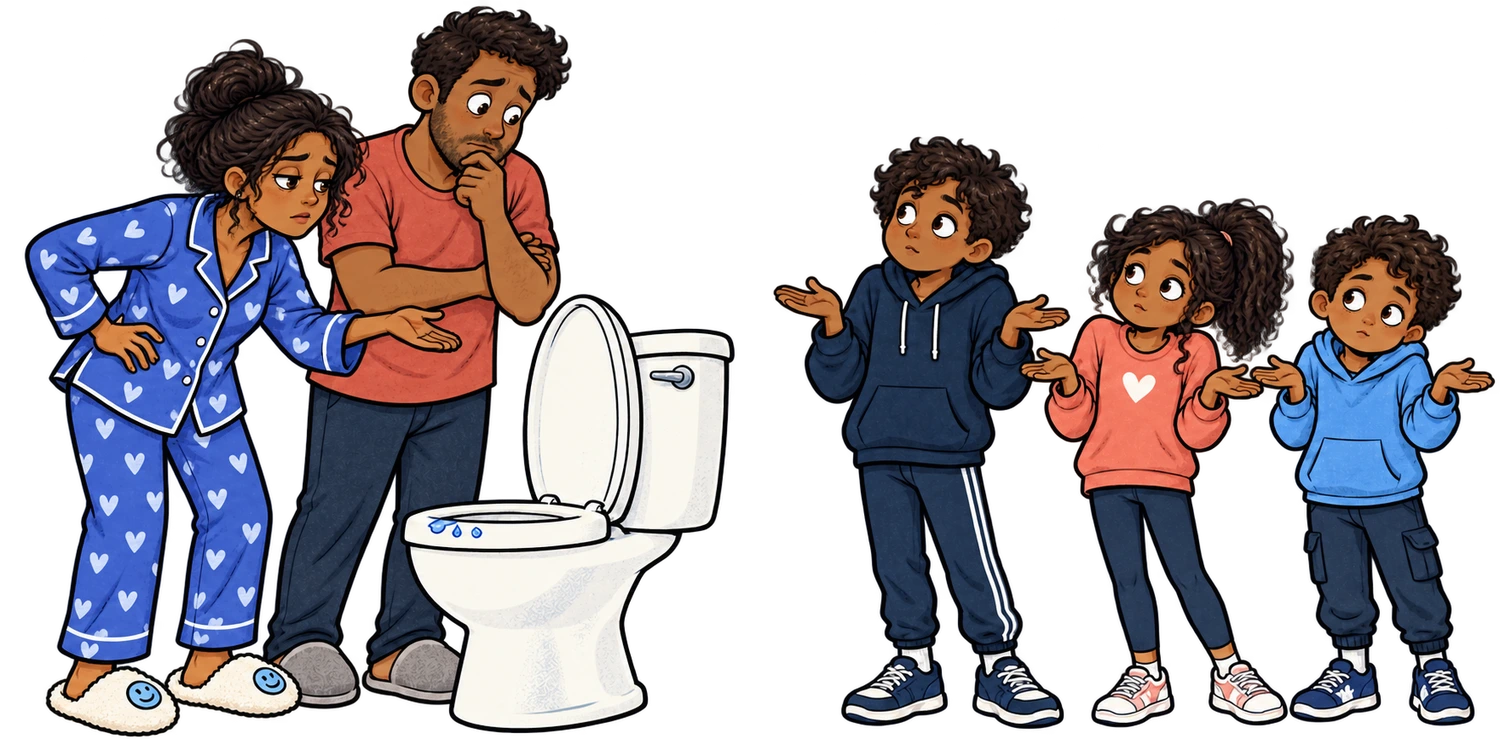
A wet seat or a missed flush. You ask who used the toilet last, and somehow, nobody did.
The lid won’t open until they enter their own code. Pee Patrol knows who’s using the toilet before they go, so you have a visit to check if they leave a mess.
Here’s the idea
The lid stays locked until they enter their own code. That’s how Pee Patrol knows whose visit to record if they leave a wet seat or forget to flush.
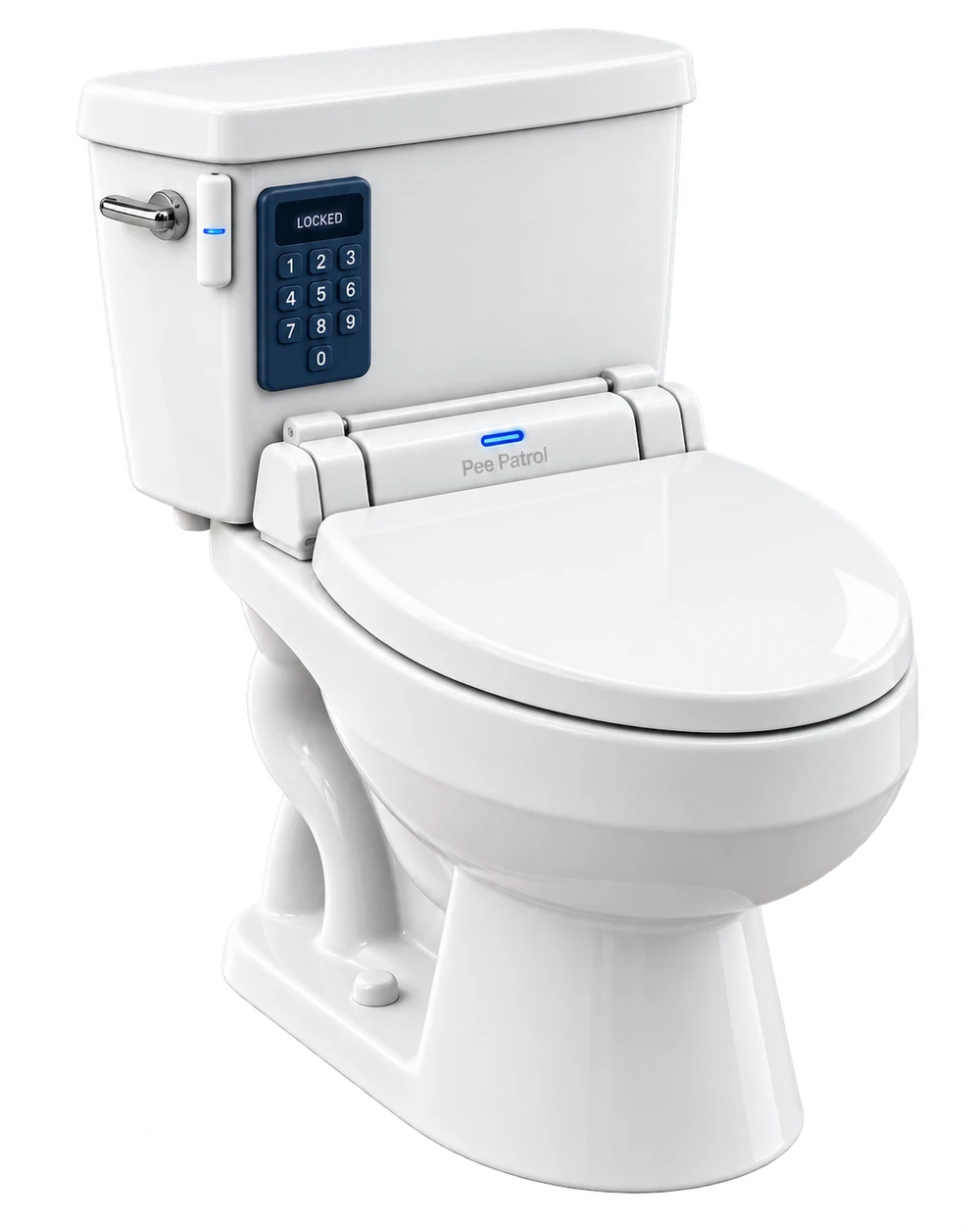
They have to enter their own code to open the lid and use the toilet. Pee Patrol links the visit to that person before they go.
Try Alex’s personal code: 1234
Tap the keypad below
The parent’s view
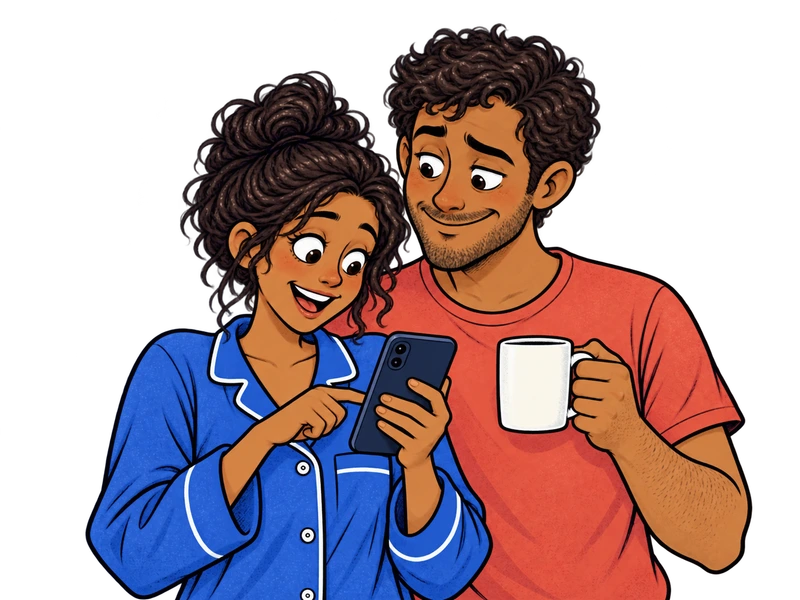
Their personal code opened the lid. Now the app can show you who used that toilet last, when they went, and what they left unfinished.
Your family’s bathrooms
Check the last visit.
Their own code is required to open the lid.
Tap a bathroom to check its latest visit.
Today’s visits
The latest visit is right here.
Everyone has their own code, so each visit has a name.
Tap the latest visit to see the checks.
Upstairs bathroom
Today at 7:12 AM
Parents can see what was checked and what was left unfinished.
See unfinished steps and a later recheck.
A look inside the app. Family names and visits shown are illustrative.
They enter their code before they go. You have a name to check if they leave a mess.
Something in the way? The lid is designed to stop closing until the path is clear.
Codes and sensor checks create the record. No bathroom cameras.
A manual emergency release is part of the design, even without power or Wi-Fi.
The lid, the seat, the app.
Here’s what to know.
A toilet lid and seat system with personal-code access, seat-wetness checks, flush sensing, and a parent app. Each visit gets a name, so parents can see who used that toilet last.
The lid locks in the closed position between visits. A personal code unlocks and opens it. Once it’s open, the person raises or lowers the toilet seat by hand to sit or stand.
The visit keeps a record of the wet-seat or missed-flush check so a parent can follow up. An unfinished cleanup does not block the next visit or prevent anyone from leaving the bathroom.
It records whose personal code opened the lid. That is why each person needs their own code and should keep it to themselves. Shared codes or unclear handoffs mean the user is uncertain.
The design includes object detection to stop or prevent closing when something is in the way, a guest code, and a manual emergency release that works without a code, power, or Wi-Fi. These features still need physical testing.
Pee Patrol uses personal codes, seat-wetness sensors, and flush-cycle sensing to create the visit record. No bathroom cameras.
No. A dry reading means no wetness was detected, not that the seat is sanitized. A recorded flush means a flush cycle was detected, not that the bowl is empty.
Not yet. Both lists are free. The founding-family list records your interest in future early access or preorders. We’ll share pricing, timing, and final details before you decide to buy.
Help us bring Pee Patrol to family bathrooms. Follow the project, or let us know you’d like one when it’s ready.
Get development news and hear when we’re ready to launch.